
The old guard of Nigerian business built refineries, banks, and telecom networks with patient, decades long hands. The new guard is building in dog years, payments, edtech, media and creator platforms that go from idea to national habit before the old guard finishes their morning meeting. These are the people trying to own what comes next and none of them is waiting for permission.
1. Olugbenga “GB” Agboola — Flutterwave

Olugbenga “GB” Agboola co-founded Flutterwave and leads it as CEO, scaling it into one of Africa’s most valuable fintechs, alongside Go Time AI, a program funding African startups building artificial intelligence. His vision is that moving money across African borders should feel as ordinary as sending a WhatsApp message and that whoever builds that plumbing owns the next two decades of African commerce. He turned a payments startup into a multi-billion-dollar company operating across the continent, then turned around to fund the next wave, this time in AI. The man turned “send something small for me” into a unicorn, and he’s already placing bets on the next one. If the next chapter has a doorkeeper, it’s probably GB.
2. Shola Akinlade — Paystack

Shola Akinlade co-founded and led Paystack, the payments company acquired by Stripe in 2020 in a deal reported at roughly $200 million, on the belief that paying in Nigeria could be so smooth the friction simply disappeared — and that a Nigerian-built company could be world-class enough for Silicon Valley to fly across the Atlantic and write the cheque. He built the rails thousands of Nigerian businesses now run on, then took a national honour, Officer of the Order of the Niger, in 2022 a proof that the old establishment had noticed what the young ones were doing. The guy made paying online feel so effortless that it now feels mildly rude to ask for cash. He normalized the thing your parents said would never work.

3. Iyinoluwa Aboyeji — Future Africa
Iyinoluwa Aboyeji leads Future Africa, the venture platform he now runs after co-founding Andela and helping build Flutterwave, where he served as managing director. His bet is that African startups need African capital and African mentorship and that a few well-placed cheques can shape an entire ecosystem. He keeps showing up at the beginning of every important story, from outsourcing talent to payments to venture capital, then quietly moving to the next one before the confetti settles. If Aboyeji is in the room, check what he’s building, the thing he’s leaving will be famous in two years.
4. Tayo Oviosu — Paga
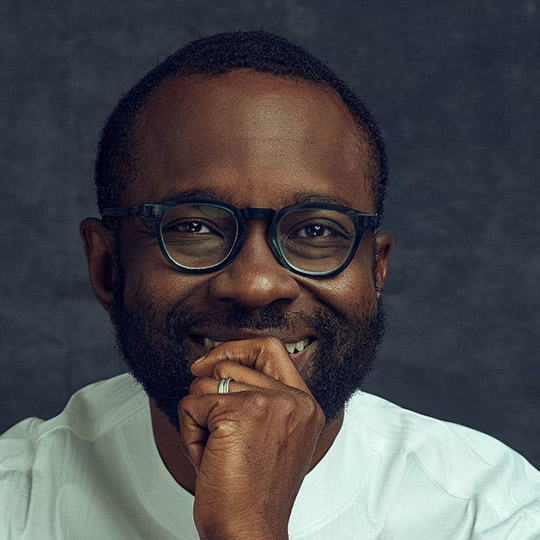
Tayo Oviosu founded Paga, the mobile payments company focused on digitizing cash in emerging economies, on the understanding that in a country where cash is still king, whoever gets the king to move online quietly inherits the kingdom. He’s spent more than a decade building payment rails for the unbanked and underbanked, the slow, unglamorous work that becomes essential the moment everyone else realizes they need it. In a country where “I’ll send it” can mean four different things and none of them is instant, Oviosu has been politely but persistently trying to make it actually arrive.

5. Odunayo Eweniyi — PiggyVest
Odunayo Eweniyi co-founded PiggyVest, the savings and investment platform that became a household name, on the belief that saving money in Nigeria shouldn’t feel like a punishment — and that financial products should be built for ordinary people, especially women, rather than spreadsheet enthusiasts. She later co-founded the Feminist Coalition during the #EndSARS movement, proving a founder can build a company and a movement at the same time without breaking stride. The woman convinced Nigerians to save money by making it feel like a game, a feat your parents spent decades insisting was impossible.
6. G.U Abraham — Xilolo

G.U Abraham is the founder of Xilolo, after founding a social media platform called Zagasm. Xilolo, a creator-economy platform built on one sharp idea, creators should own their audience, not rent it. His thesis is blunt; social media was never really about likes; it was about distribution, and whoever turns distribution into a real business owns the next chapter. Most creators stay broke, he argues, because they’re paid by algorithms rather than by the people who actually follow them. A follower is not a customer and millions of views can still leave a creator with an empty bank account. His answer is to turn that critique into a product ‘Xilolo’ is his attempt to decentralize how creators earn through tickets, paid communities, and direct tips so the algorithm stops being the landlord and starts being just another street the audience walks down. The founder looked at millions of views earning zero naira and decided the algorithm shouldn’t be the one collecting rent. If he’s right, it’s a new chapter. If he’s wrong, it’s still the sharpest diagnosis most boardrooms have produced all year.
7. Sim Shagaya — uLesson
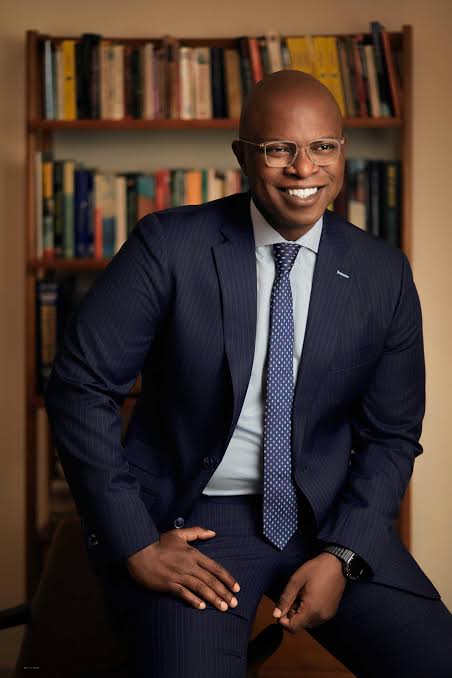
Sim Shagaya built uLesson, the edtech platform teaching students with video lessons and personalized learning, after earlier founding the e-commerce firm Konga, betting that a child in Kano deserves the same quality of instruction as a child in Ikoyi, and that technology is how you close that gap. He’s one of the few Nigerian founders who has built at scale in two entirely different industries, and his current wager is on the most important market in the country: the minds of the next generation. The man is teaching Nigerian children physics while the national grid takes a coffee break. If anyone can manage it, it’s the guy who survived Nigerian e-commerce.
8. Jason Njoku — iROKOtv
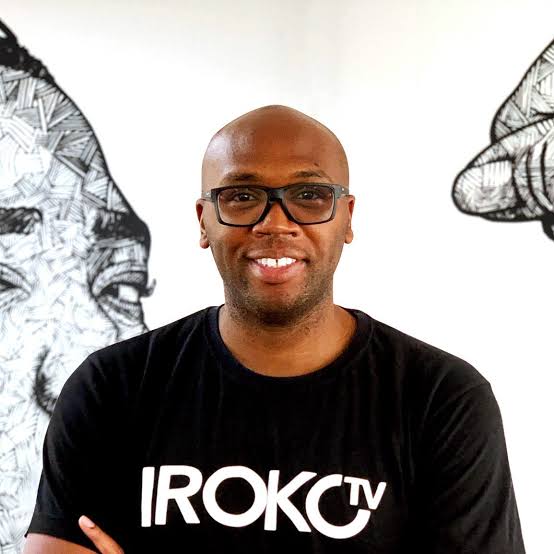
Jason Njoku co-founded iROKOtv, the video-on-demand service that put Nollywood online and earned the “Netflix of Nollywood” label, on the conviction that the world’s second-largest film industry by volume deserved a real distribution platform rather than pirated DVDs in a suitcase. He took thousands of Nollywood titles, digitized them and built a business out of something most people dismissed as a cottage industry and he’s still standing after riding out the streaming wars. The man put Nollywood online before “streaming” was a word your aunty used and she now pays a subscription.

9. Uche Pedro — BellaNaija
Uche Pedro built BellaNaija, the media-tech brand whose wedding, style and lifestyle content pulls in more than 200 million monthly impressions, on the belief that African entertainment and lifestyle deserved a platform that treated it seriously not as a side hustle, but as a business with real scale. She grew a single blog into a multi-brand media empire and became one of the most quietly influential media executives on the continent. The woman turned aso-ebi aesthetics and celebrity gist into a nine-figure impression machine. That’s not gossip — that’s infrastructure.
10. Mark Essien — Hotels.ng

Mark Essien built Hotels.ng, one of Nigeria’s earliest online hotel-booking platforms, on the conviction that the internet could make Nigerian hospitality searchable, bookable, and accountable — a bet he placed before most people in the country had reliable data to believe it with. He kept building through the era when “buy online” was still treated as a conspiracy theory, then became one of the ecosystem’s earliest startup investors, quietly backing the generation that came after him. The man bet on online bookings back when your uncle insisted the internet was a scam. Your uncle now has three apps.

